Listen to the first briefing
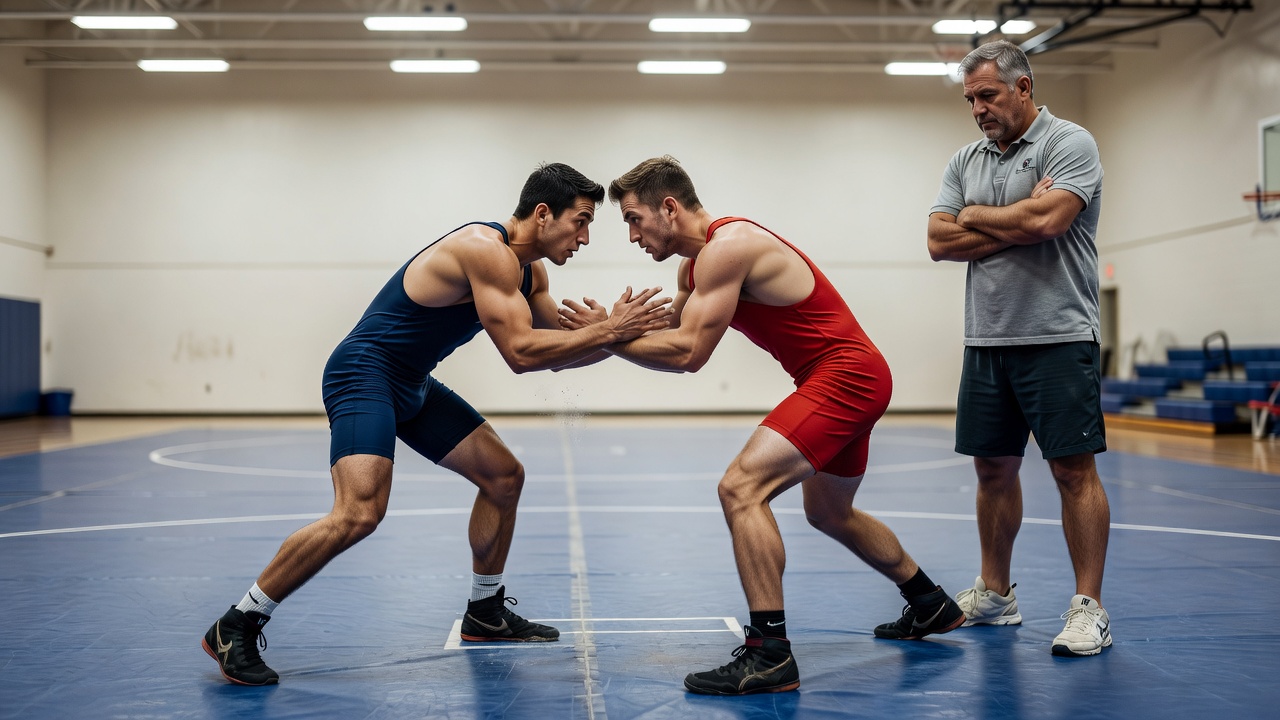
Before the first demonstration, listen for the purpose of the session and the limits of the task. Athletes should know whether they are rehearsing a position, working against controlled resistance or entering a live exchange. Those distinctions affect pace, partner behaviour and the space required. “Go hard” is not a complete explanation of any of them.
Notice how late arrivals are brought into the session. A quick private briefing can be more useful than assuming they understood an instruction delivered before they entered. The same applies when a task changes. Clear instructions are part of room management, not simply an aspect of teaching style.
Watch the matching process
Partner selection involves more than body size. Experience, control, age, the intended technique and current restrictions can all matter. Ask how the coach decides when athletes may choose their own partners and when pairs are assigned. There should be a practical way for an athlete to raise a concern without having to challenge a partner publicly.
Mixed-experience sessions need deliberate organisation. An experienced athlete can help a newer partner, but should not automatically become an unpaid substitute coach or be expected to manage unsafe behaviour alone. Observe whether the coach checks the pair after the first exchange and changes the task when the match is not working.
Follow the coach’s sightline
A coach who is explaining a detail to one pair may briefly lose sight of the rest of the room. That is not automatically a failure, but the session structure should account for it. Look for supporting coaches, paused groups, restricted tasks or positions that allow a wider view. The answer is not necessarily a single universal athlete-to-coach ratio.
Ask who has overall responsibility when several coaches share the mat. Without a clear lead, one coach may restart a group while another is managing an interruption. Equally, a crowded edge full of observers can reduce useful sightlines. Positioning and communication deserve the same attention as technical knowledge.
Make the stop signal observable
A stop instruction should be recognisable over ordinary room noise, and athletes should know what to do when they hear it. Watch a routine pause: does movement stop promptly, and do pairs remain aware of nearby activity? Ask what happens if an athlete signals discomfort, a joint opens or someone enters the active area unexpectedly.
The goal is not silent obedience at any cost. Athletes need a reliable way to report pain, uncertainty, inappropriate conduct or a task they do not understand. A room that punishes every interruption may conceal problems rather than prevent them. The response to a small concern often reveals more than the welcome speech.
Check welfare beyond the mat
For programmes involving children or adults at risk, ask to see the safeguarding policy and the reporting route. A notice should identify an accessible contact and explain what happens if the concern involves the usual coach. Background checks, where required, form only one part of a wider system.
British Wrestling publishes sport-specific organisational information. The NSPCC Child Protection in Sport Unit provides UK safeguarding resources, and the U.S. Center for SafeSport serves a different national framework. Use the body relevant to the programme’s jurisdiction; do not treat one country’s process as universal.
Ask about photography, changing-room access, transport and direct messaging with younger athletes. Video can support feedback, but recording needs a clear purpose, appropriate permissions and controlled access. An athlete should not have to accept public social-media exposure as the price of attending training.
Read feedback for usable detail
Useful feedback identifies an action the athlete can recognise and practise. During observation, note whether the coach checks understanding and gives another opportunity to try. Loudness, charisma and a decorated competitive history may shape the atmosphere, but they do not by themselves show whether the session is understandable or adaptable.
UK Coaching offers resources on coaching practice and participant experience. They are a helpful reference point, not a certification of any room described here. Ask how coaches continue learning and how athletes can offer feedback outside the immediate pressure of a live session.
Stay for the final five minutes
The end of practice reveals handovers. Who checks injuries or concerns? Who records a damaged surface? Who knows whether the next group has arrived? Athletes should leave with a clear understanding of any follow-up, rather than a vague instruction to train through a problem or sort it out later.
A strong coaching environment does not need constant theatre. It needs a repeatable process that can accommodate an ordinary interruption without losing supervision or dismissing the person who raised it. That is something you can observe, ask about and record without pretending to predict competitive results.